Start from the existing foundation.
The MVP set the baseline. I learned its existing implementation and constraints, then used that context to evolve the module without presenting the original work as my own.

[ Dynamic Project Gantt ]
I inherited a minimal Gantt implementation and became the developer responsible for evolving the module as requirements, project rules, and user needs grew.
The MVP set the baseline. I learned its existing implementation and constraints, then used that context to evolve the module without presenting the original work as my own.
I translated refined rules into schedule states for extensions of time, milestone claims, and automated project-status triggers, then carried those changes through implementation.
I refined the UI/UX and adapted the workflow as project rules changed. The data-loading decision below addresses a concrete reliability concern without making unverified performance claims.
[ Laravel / data loading ]
I reduced an N+1 query pattern by preloading required relationships with Laravel eager loading (with()). I stress-tested the Gantt module with 3,000 rows of data to validate the approach at scale.
with()[ Fictionalised product evidence ]
This is the largest module I have developed in my current role. These portfolio mockups reconstruct its key interaction patterns with fictional data and a generic project-management identity; they are not production screenshots.
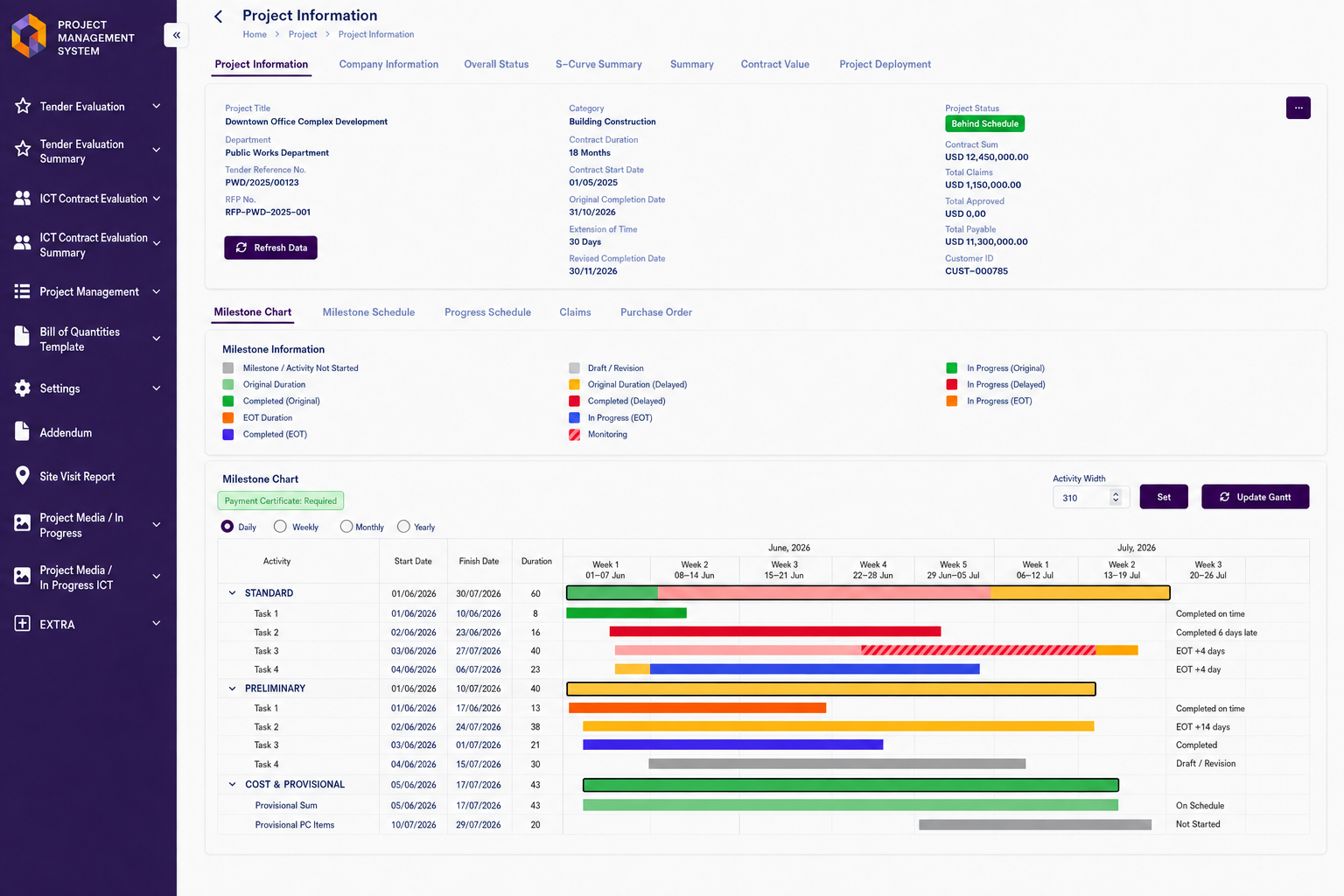
A consolidated Gantt view brings milestone structure, schedule states, monitoring signals, and project context into one working surface.
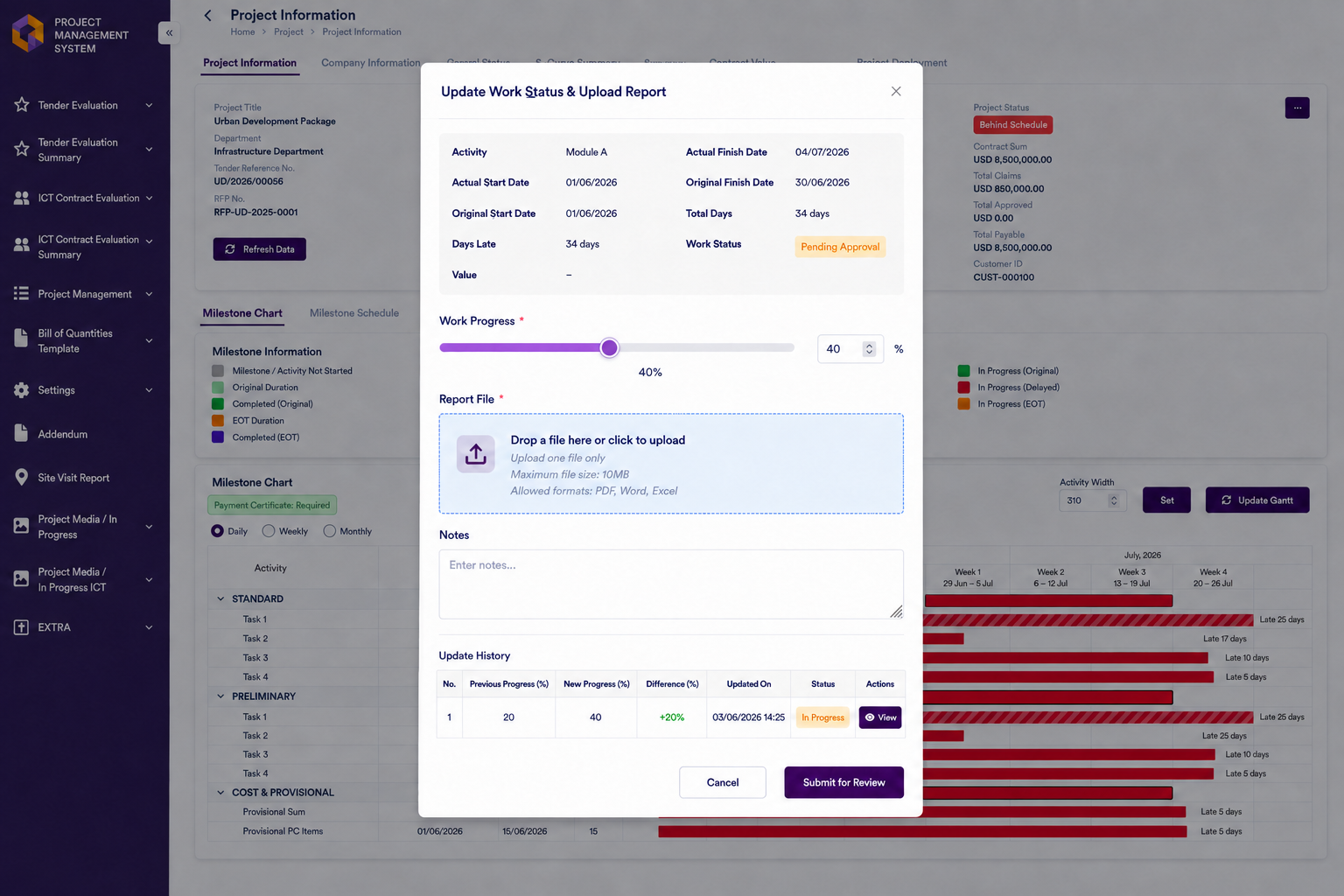
The update flow combines progress entry, supporting documents, notes, and history before work is submitted for review.
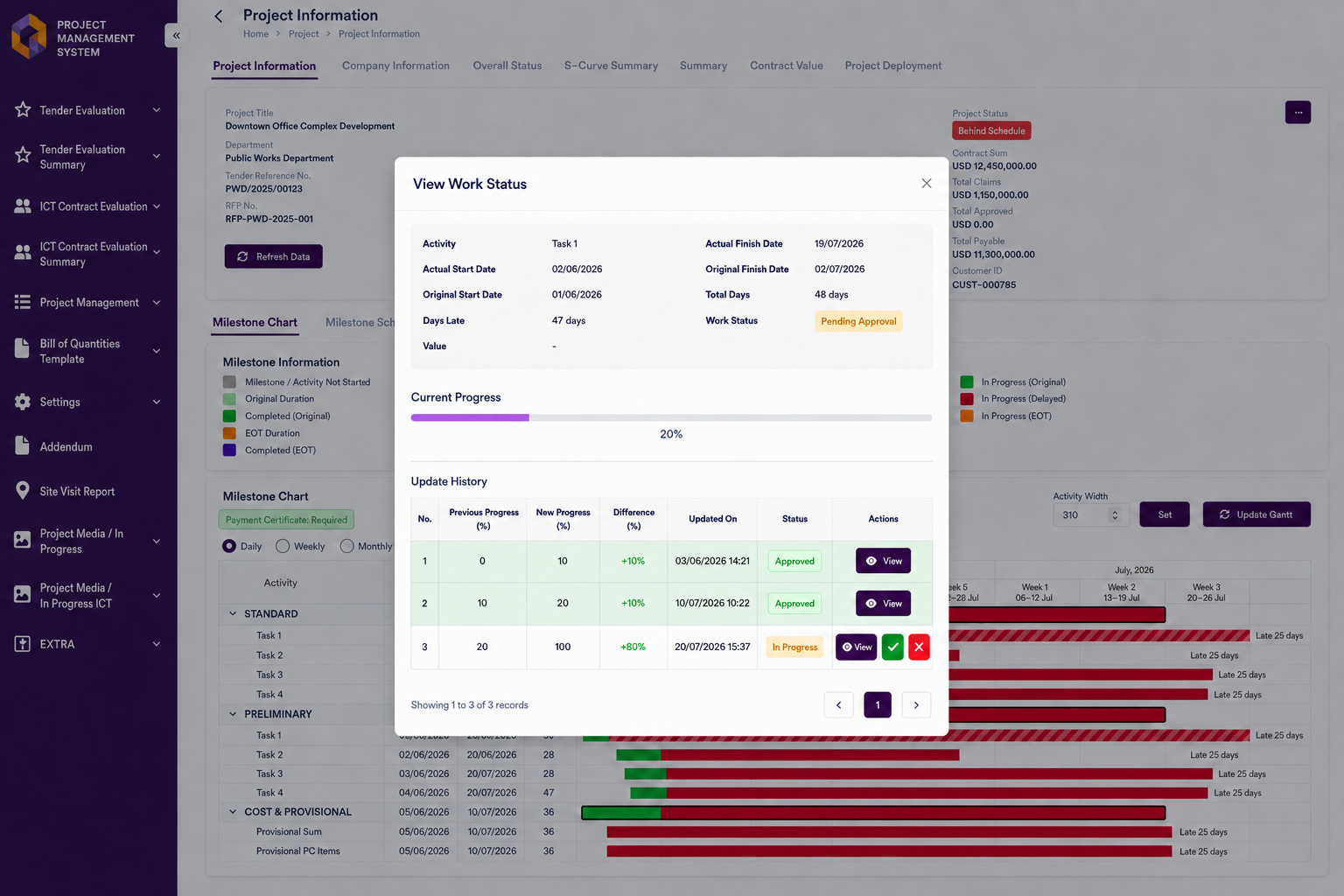
A dedicated review state makes progress history, approval status, and the next available action visible in one place.
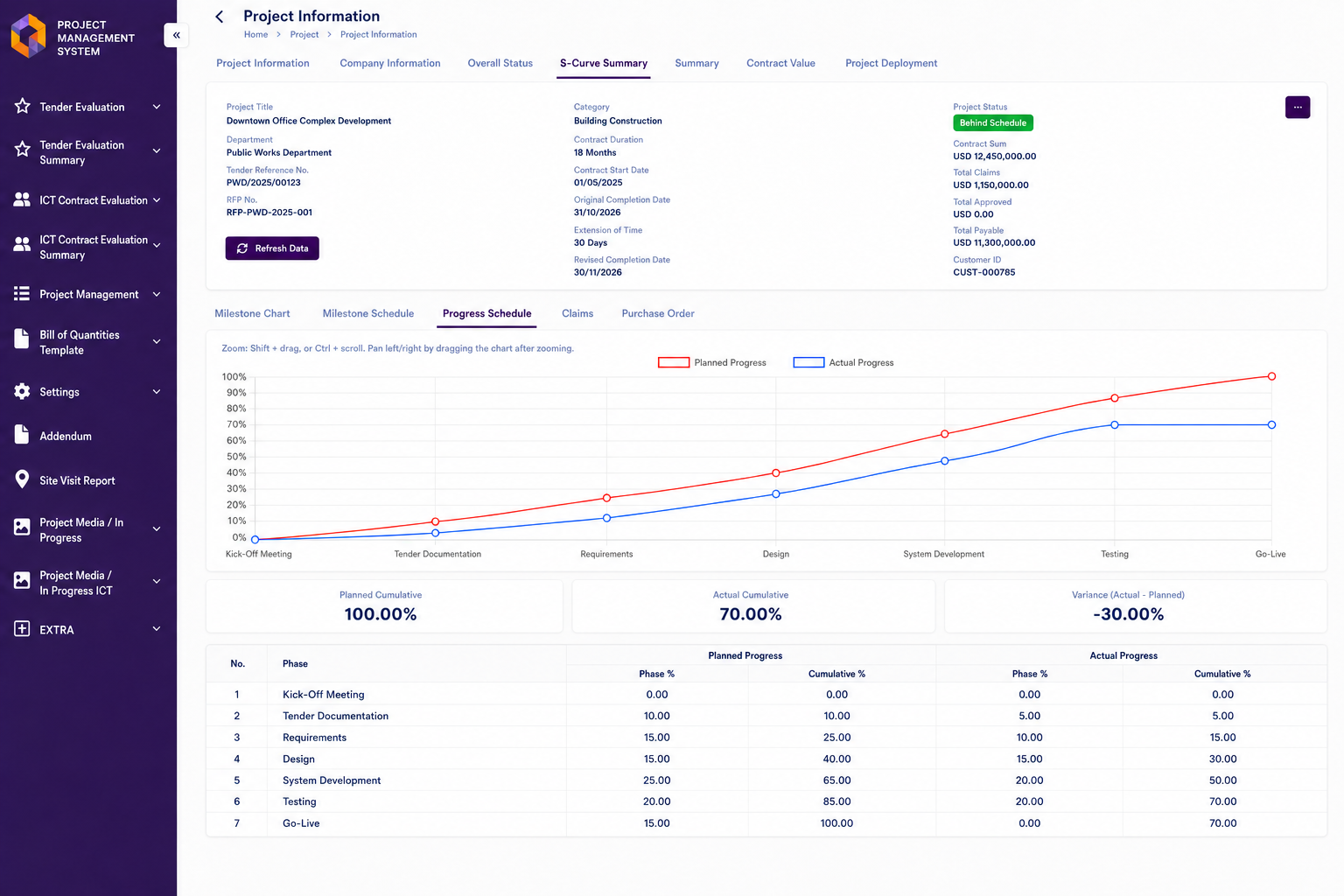
The S-curve translates schedule data into planned-versus-actual progress and a legible cumulative variance view.
Fictionalised reconstruction — no production data, source code, or confidential internal content is shown.